Confessions of a Grass Seed Addict (A Springer Spaniel’s Story)
Names have been changed to protect the guilty. Mainly because my humans still think this was “just bad luck.”
Hello.
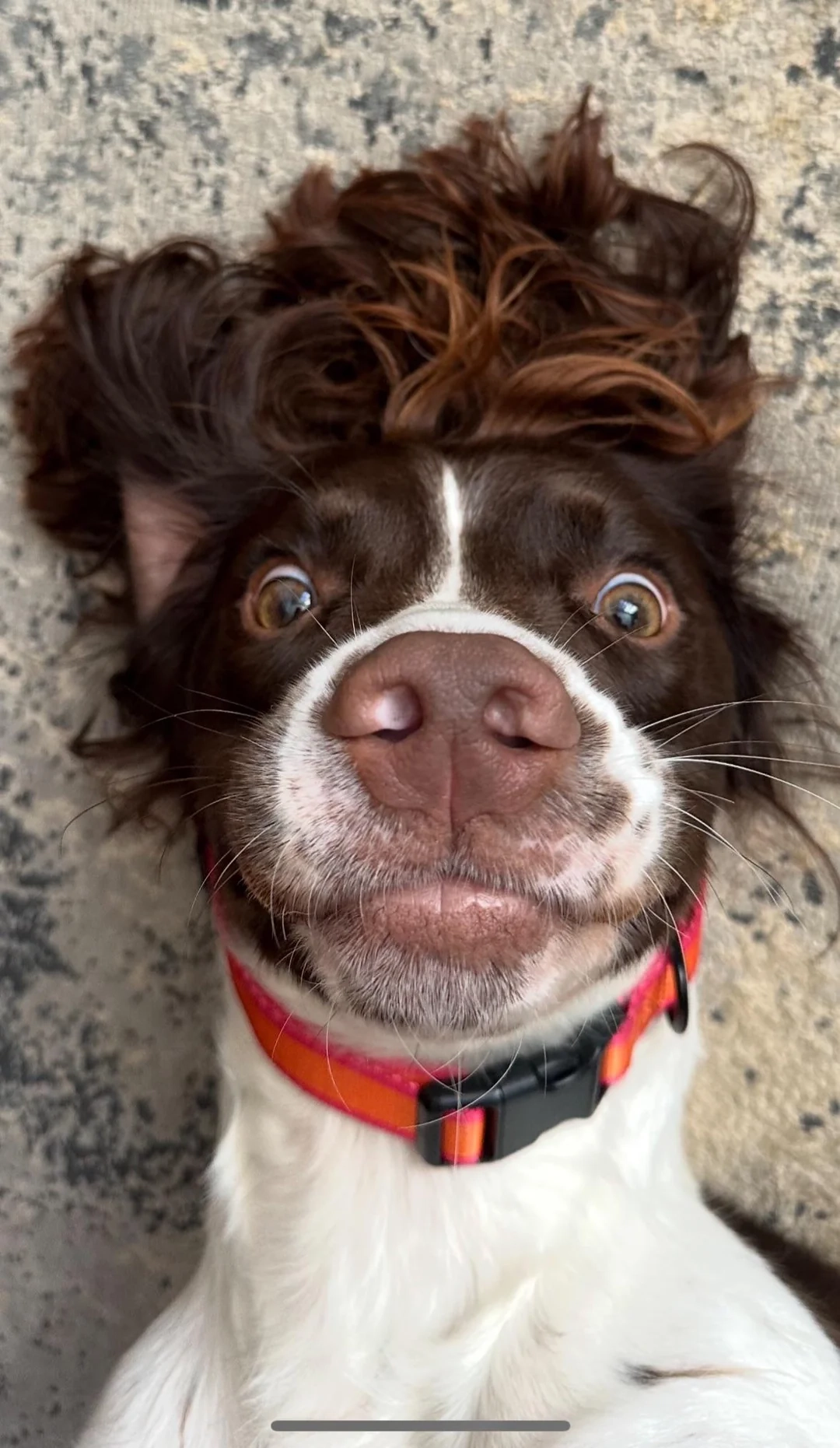
My name is Dave.*
(*Not actually Dave.)
I am a Springer Spaniel.
Before you judge me, I’d like to point out that I was simply doing my job.
A tennis ball had been launched into what my humans refer to as “long grass.”
What followed was what professionals call enthusiastic retrieval.
I prefer to think of it as an Olympic-level commitment to customer service.
Unfortunately, the long grass had other ideas.
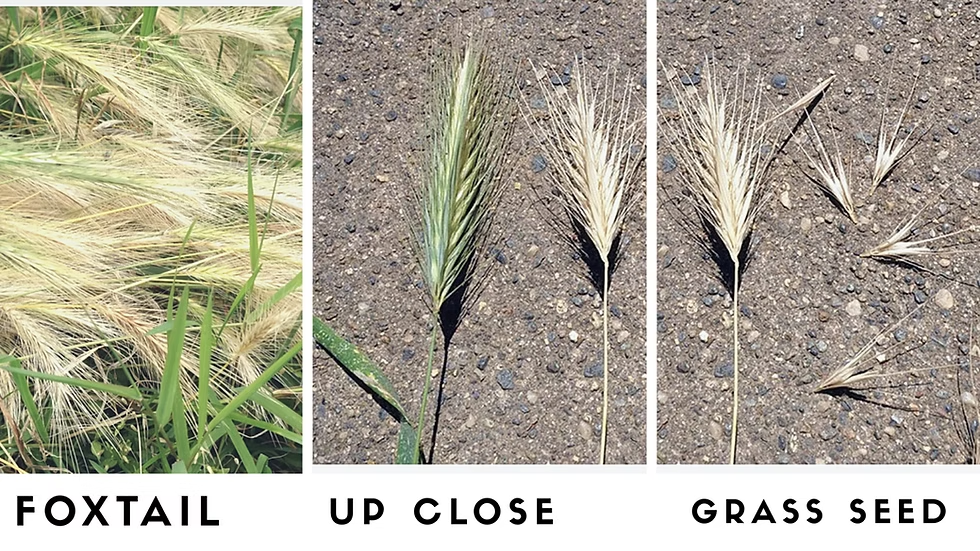
Apparently every single grass seed in Surrey had gathered for a conference, saw me coming at approximately 30 mph, and unanimously decided:
“Let’s hitch a lift.”
Next thing I know, I’m home shaking my head like I’ve just discovered heavy metal.
My humans looked inside one ear.
Nothing.
The other ear.
Nothing.
Google diagnosed me with everything from allergies to existential dread.
Eventually they took me to the lovely independent team at Beech House Vets.
The vet smiled the smile vets smile when they already know what’s coming.
“A spaniel?” she asked.
“Yes.”
“Been in long grass?”
“…Yes.”
There was a pause.
“I think we should have a proper look.”
Now, dogs, I don’t know if you’ve ever had anyone look down your ear canal with one of those little scopes.
It’s deeply undignified.
Especially when everyone in the room keeps saying things like:
“Oh yes… there it is.”
“There are actually two.”
“Can you see the second one?”
No.
No, Susan.
I cannot.
They’re inside my ears.
As it turns out, I hadn’t collected one grass seed.
I’d managed to collect two in each ear.
Four.
FOUR.
Honestly, if there was a competition, I’d have won.
Because grass seeds are surprisingly sneaky little things. Their pointed shape means they don’t just sit there—they keep travelling forwards. Left alone, they can work their way deeper into the ear canal, causing pain, infection and, in some cases, damage to the eardrum.
So instead of pretending I was absolutely fine (I wasn’t), I had a short sedation while the team carefully removed every last one.
I woke up feeling considerably less like there was a woodland living inside my head.
My humans, meanwhile, received a gentle lecture about checking my ears after walks.
Will this stop me charging head first into long grass tomorrow?
Absolutely not.
I’m a Springer Spaniel.
We have a reputation to maintain.
Vet’s Corner (because apparently I’m not allowed to write everything)
Every summer we see a surge in grass seed cases across Surrey, particularly in adventurous breeds like Springer Spaniels, Cockers and Labradors. The warm weather means grass seeds become dry, sharp and incredibly good at attaching themselves to dogs.
Common places they hide include:
-
Ears
-
Between the toes
-
Eyes
-
Under the eyelids
-
Nose
-
Armpits
Signs to look out for include:
-
Sudden head shaking
-
Holding one ear down
-
Excessive licking of a paw
-
Sneezing repeatedly after a walk
-
Squinting or rubbing an eye
-
Sudden pain after running through long grass
The sooner grass seeds are removed, the easier they are to retrieve and the less likely they are to cause more serious problems.
If your dog suddenly starts showing any of these signs after a walk, it’s worth getting them checked promptly.
At Beech House Vets, our independent veterinary team regularly removes grass seeds from dogs across Hersham, Cobham, Esher, Thames Ditton, Shepperton and the surrounding Surrey villages. We use appropriate sedation when needed so they can be removed safely, comfortably and with as little stress as possible.
As for Dave…
He’s back in the fields.
We’ve given up trying to explain consequences.